Hazardous Tree Removal in Shoreline, WA

Hazardous Tree Removal is the controlled dismantling of structurally compromised trees that threaten homes, driveways, and utility lines, and it serves Shoreline homeowners dealing with leaning trunks, root decay, and storm-weakened limbs. Many older residential lots across Shoreline hold mature conifers and hardwoods that develop included bark, cavity rot, or failing anchor roots after wet Puget Sound winters. Our crews begin with a defect inspection and load evaluation before selecting rigging or crane-assisted removal methods. Scheduling stays open through 2026, including seasonal storm periods. Shoreline Tree Service Pros manages each removal with organized workflows and precise coordination.

Click Me to Call: (206) 222-2968

Request Your Estimate

Send your details and our team will coordinate a prompt on-site evaluation.

// Hazardous Tree Removal Service //

What Our Hazardous Tree Removal Service Includes

Hazardous Tree Removal is the systematic takedown of unstable or defective trees, and at Shoreline Tree Service Pros it includes defect inspection, rigging, sectional dismantling, and cleanup across Shoreline properties. Our arborists assess lean angle, root plate condition, and canopy weight distribution before setting a removal sequence. Depending on access, crews use crane-assisted lifts or controlled rope rigging to lower sections safely. Residential yards, commercial lots, and multi-unit complexes each receive tailored coordination. Efficient scheduling keeps 2026 projects on track with minimal disruption. Work finishes with a post-job walkthrough.
Call us on: (206) 222-2968
Leaning storm-damaged tree with trunk cracks near a Shoreline home
Arborist inspecting root collar decay and fungal conks on a hazardous tree

Signs You Need Hazardous Tree Removal

What Signs Mean Your Property Needs Hazardous Tree Removal?

Signs your property needs Hazardous Tree Removal include visible lean, cracked bark, hollow trunk cavities, and large deadwood suspended over structures. Shoreline homeowners often notice fungal conks near the root collar, heaving soil at the root plate, or included bark forming weak branch unions. Cavity rot and girdling roots quietly reduce a tree’s load capacity, while storm-loaded canopies raise the chance of limb failure. Wet 2026 winters across the Puget Sound region tend to accelerate decay and loosen anchor roots on saturated soils. These are not cosmetic concerns.

Sudden limb drop, seasonal fungal growth, and trunk splitting typically point to advanced structural failure that requires professional intervention. Our arborists confirm the level of risk through a defect inspection, then plan a removal sequence that protects nearby buildings and utility lines. Hazardous Tree Removal resolves these conditions before failure occurs, restoring safety to Shoreline yards and driveways with organized, efficient scheduling.

Request a Risk Evaluation (206) 222-2968

/// Hazardous Tree FAQs ///

Hazardous Tree Removal FAQs for Shoreline Homeowners

Answers to common questions about hazardous tree removal in Shoreline, covering scheduling, inclusions, site preparation, pricing factors, and local conditions our crews plan for during every project.
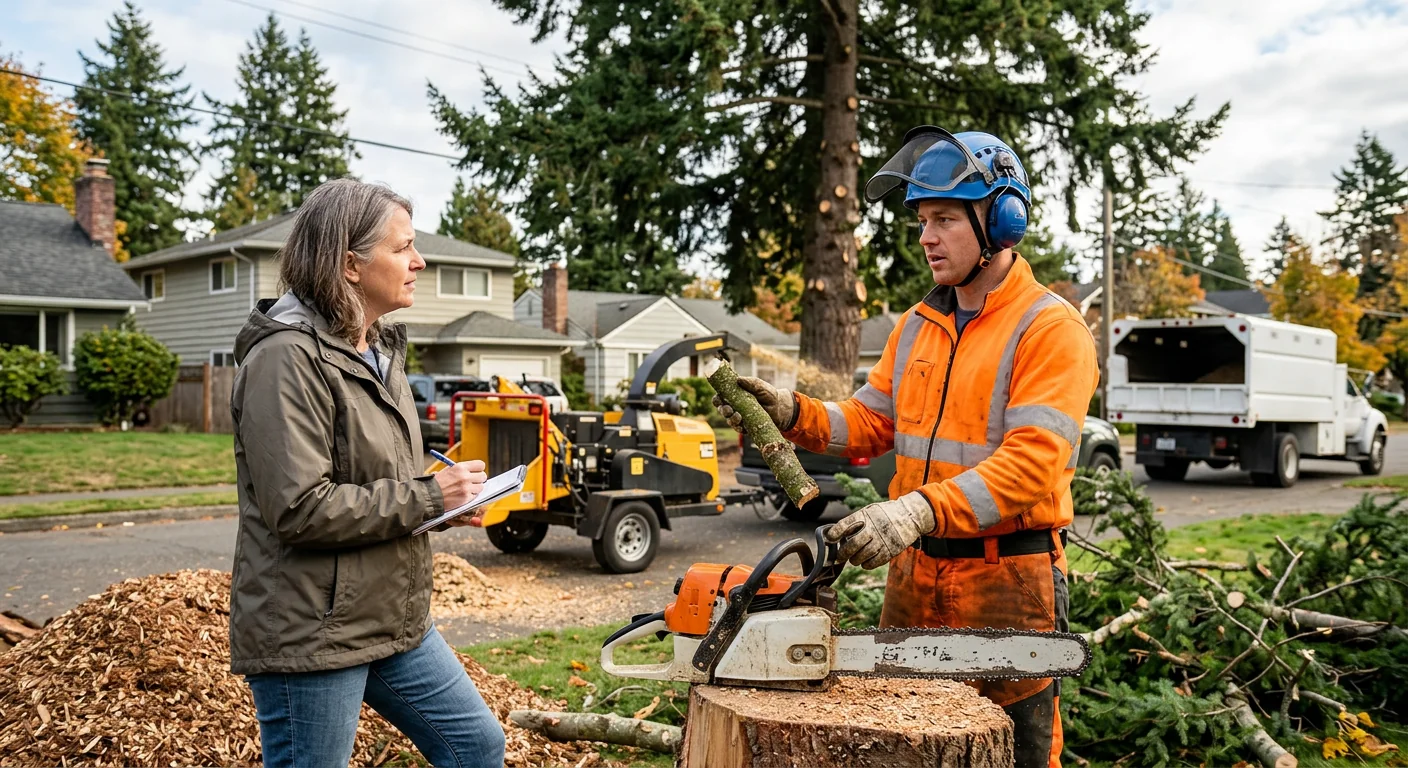
Certified arborist inspecting a leaning hazardous tree near a Shoreline home

Scheduling depends on the results of an initial risk assessment, which we prioritize for trees showing active structural failure such as split unions, root plate lifting, or major deadwood over occupied structures. After the inspection, our crew coordinates a removal window based on rigging requirements and equipment availability. We confirm the schedule in writing so you know exactly when the work begins.

A hazardous tree removal includes the structural evaluation, controlled sectional dismantling or rigging, lowering of limbs and trunk sections, and removal of the resulting debris from the work zone. Depending on the site, we may set rigging lines, use a crane for compromised stems, and establish drop zones to protect nearby structures. Stump grinding is quoted separately unless requested with the removal.

Clear vehicles, patio furniture, and portable items from the drop zone and access path so the crew can position equipment and set rigging without obstruction. Unlocking gates and confirming space for a chip truck or crane helps the removal proceed efficiently. If pets or irrigation lines are present near the root plate, let us know during the assessment.

Cost is determined by the tree’s size, lean direction, proximity to structures, and the rigging or crane access the removal requires. A tree with advanced decay near a Shoreline rooftop involves more technical dismantling than one with open drop space, which affects labor and equipment allocation. We provide a free written estimate after the on-site assessment so pricing reflects actual field conditions.

Yes, saturated soils common across Shoreline during wet winter months reduce root plate stability and increase the risk of windthrow, especially in shallow-rooted conifers. Douglas firs and western red cedars with compromised anchorage often fail during seasonal storms. Our 2026 assessments account for soil saturation, canopy weight distribution, and prevailing wind exposure when grading a tree’s hazard level.

The decision follows a structural inspection that measures defect severity, decay extent, and load distribution across the trunk and scaffold limbs. Trees with correctable weak unions may qualify for cabling and bracing, while stems with extensive internal decay or root failure are graded for removal. We document the findings so you understand the reasoning behind the recommendation.

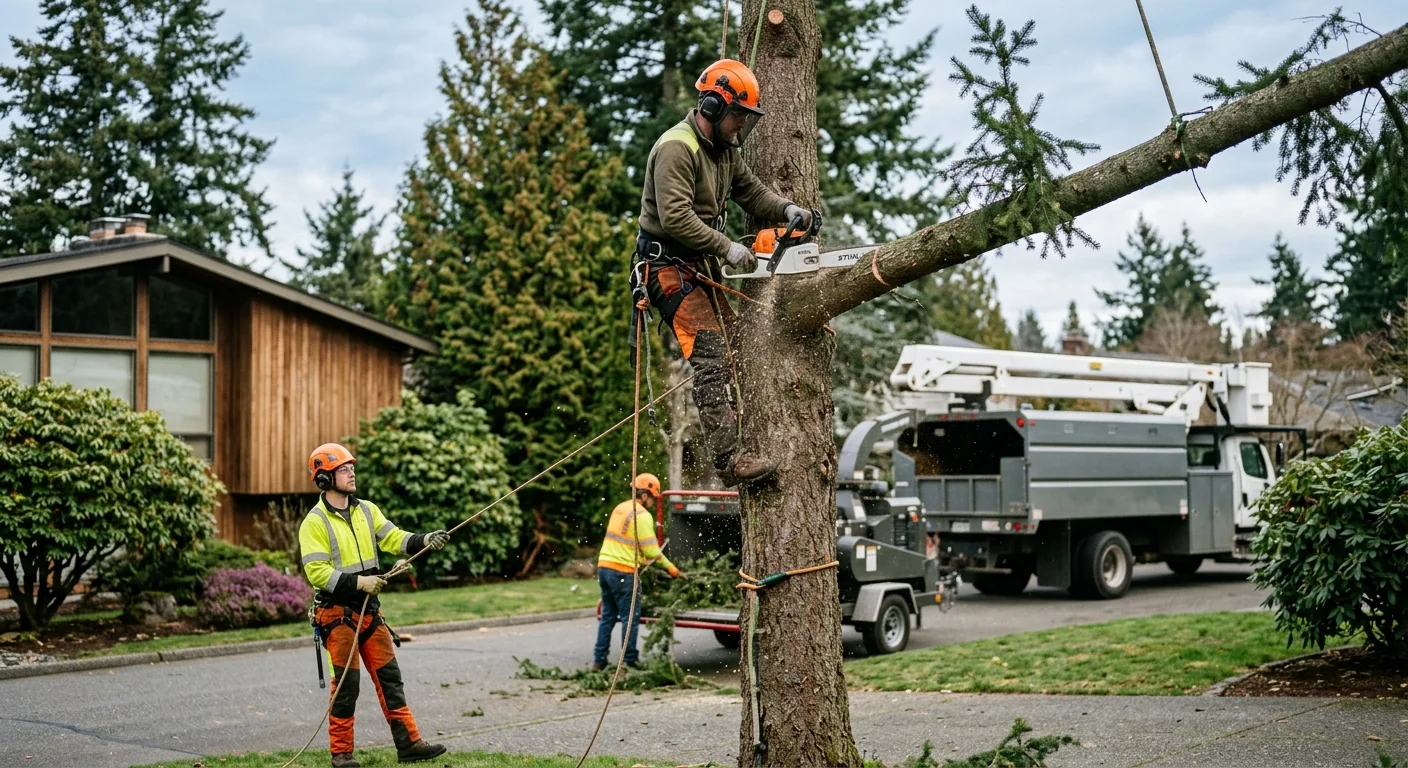
Crane positioned to remove a decayed hazardous tree beside a Shoreline house

What Should You Expect to Pay for Hazardous Tree Removal in Shoreline?

Hazardous Tree Removal pricing in Shoreline depends primarily on tree size, lean and failure risk, and the rigging or crane access required, with most 2026 jobs falling within typical local ranges once field conditions are confirmed. Trunk diameter and canopy weight influence how much sectional dismantling and controlled lowering the crew must perform. Proximity to structures, fences, or utility lines raises the technical demand, since tight drop zones require precise rigging rather than open felling. Site access also matters, because limited entry for a chip truck or crane changes labor allocation and equipment staging.

Decay severity and root plate condition further affect pricing, as compromised anchorage often calls for crane-assisted removal to keep the work zone controlled. Exact figures require an on-site assessment. Every quote comes as a free written estimate documenting the scope, so you can review the removal plan before any work begins.

/// Our Process ///

How Does Our Hazardous Tree Removal Process Work?

Request a Risk Assessment (206) 222-2968
1

On-Site Risk Assessment

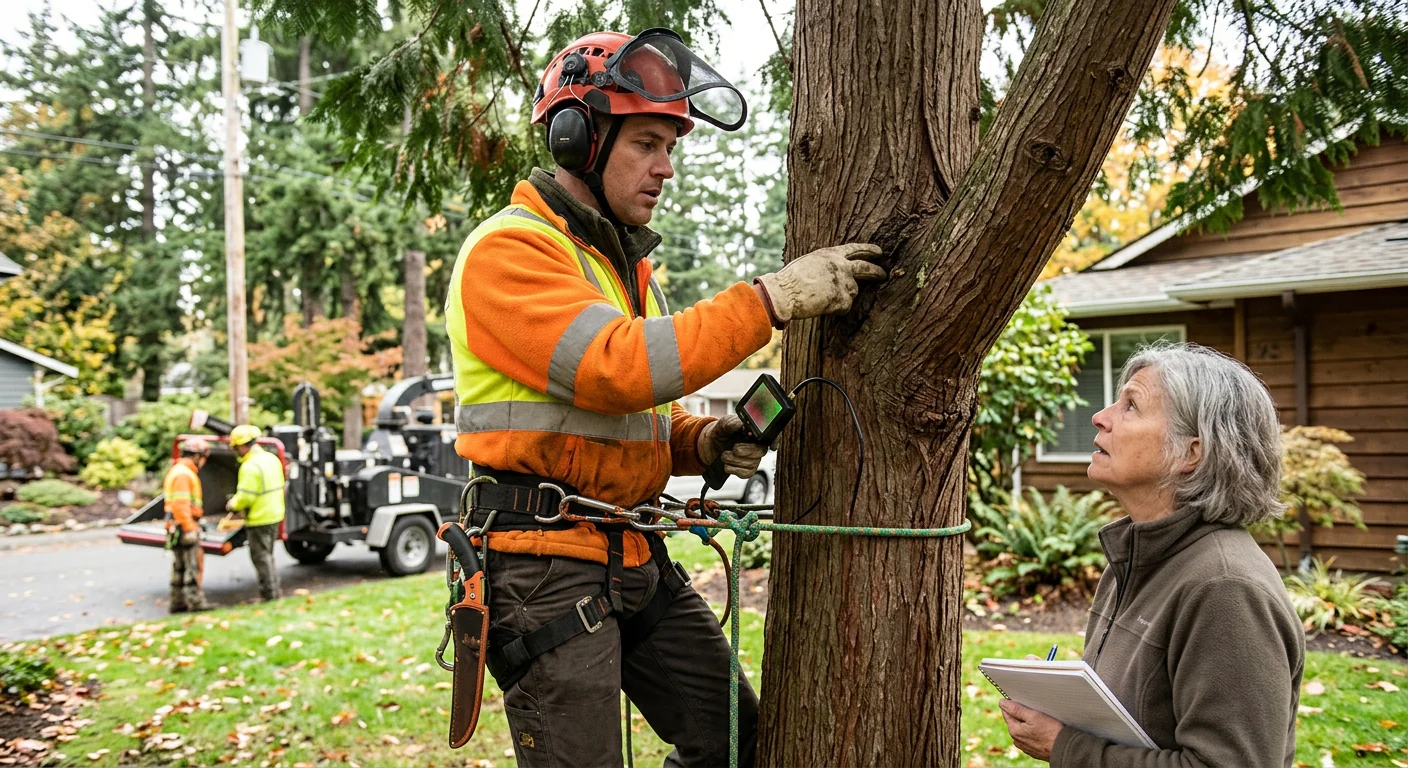
Every project starts with a structural inspection that grades defects such as decay pockets, weak unions, and root plate movement. We document the tree’s lean, canopy load, and proximity to structures to determine the safest removal method and required equipment.

2

Removal Planning and Documentation

Findings from the assessment guide a written removal plan covering rigging setup, drop zones, and crane needs. Throughout 2026, our Shoreline crews map access routes and staging areas in advance so the work proceeds without avoidable delays.

3

Site Preparation and Rigging Setup

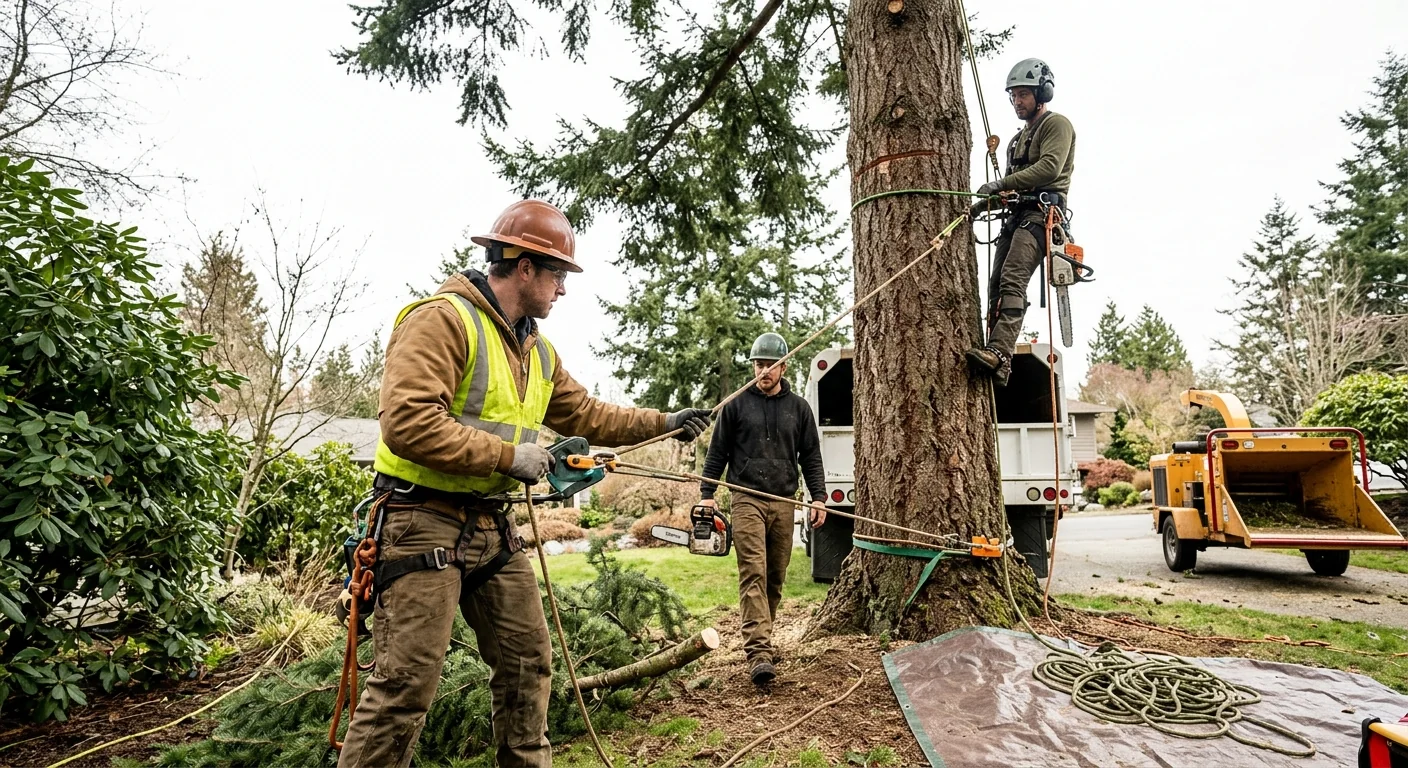
Before cutting begins, the crew establishes controlled drop zones, sets rigging lines, and positions lowering equipment. This staging protects nearby structures and keeps limb and trunk sections under control during dismantling.

4

Controlled Sectional Dismantling

The tree is taken down in measured sections using rigging or crane support, depending on decay severity and clearance. Precise cuts and coordinated lowering keep loads managed across tight Shoreline properties where open felling is not an option.

5

Cleanup and Post-Job Walkthrough

After removal, debris is chipped and hauled from the work zone and the area is cleared of cut sections. We finish with a post-job walkthrough so you can confirm the results and discuss stump grinding or replanting if needed.

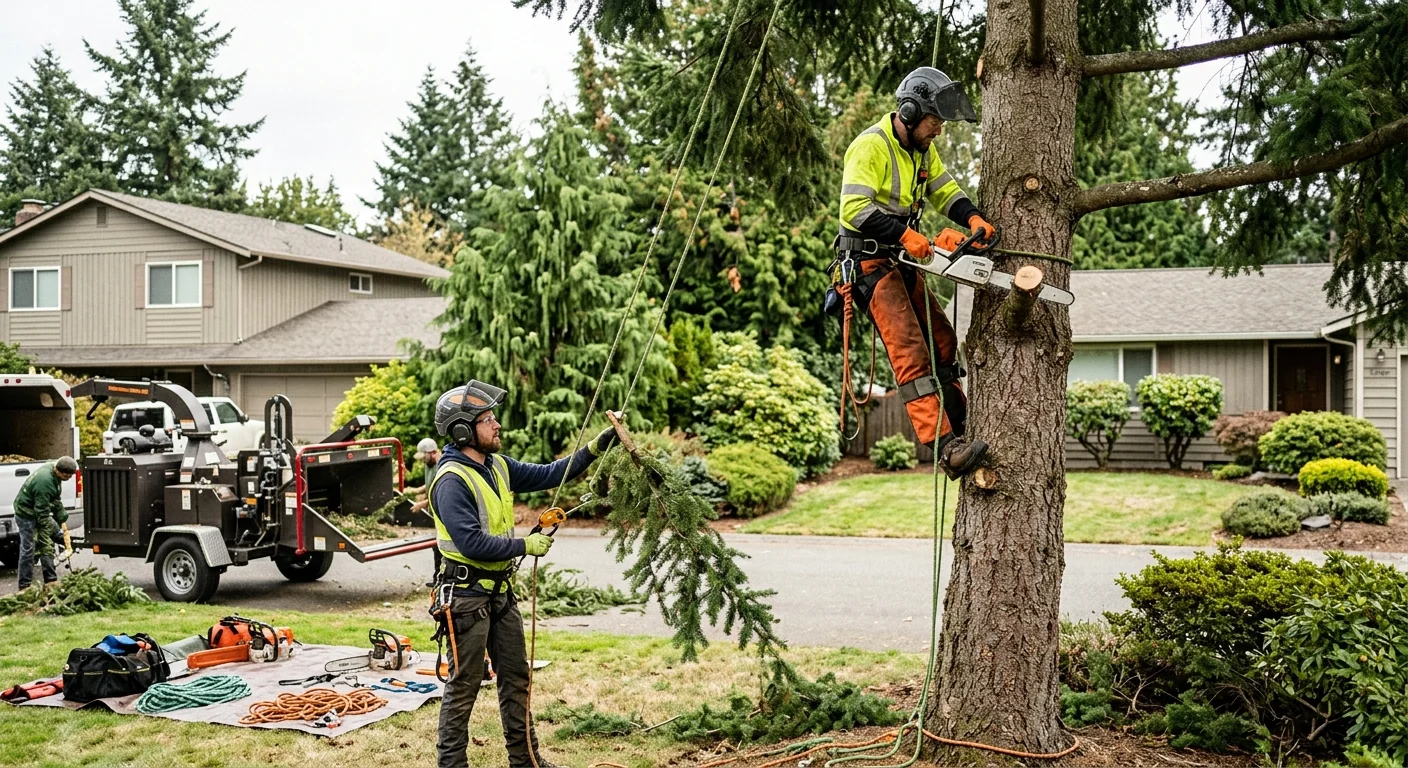
Certified crew performing controlled hazardous tree removal in a Shoreline residential yard

Proven Hazardous Tree Removal Results

Why Do Shoreline Homeowners Trust Us for Hazardous Tree Removal?

Shoreline homeowners choose Shoreline Tree Service Pros for hazardous tree removal because every project begins with a documented risk assessment, a written estimate, and a controlled rigging plan built around the tree's specific defects. Our crews inspect structural weaknesses such as included bark, root decay, and compromised leaders before selecting the correct removal method, whether sectional dismantling or crane-assisted extraction. Each removal follows a sequenced drop and rigging procedure to protect nearby structures, fences, and landscaping. We provide photo documentation of pre-work conditions and post-job walkthroughs so you can verify results. Short, direct, accountable. In 2026, our scheduling system continues to keep hazardous removals organized and completed with minimal disruption to your property.

Precision drives how we handle unstable or storm-weakened trees throughout Shoreline. Technicians use load-rated rigging hardware, lowering devices, and directional felling techniques to manage weight and control descent in tight residential spaces. Because coastal weather and saturated soils increase failure risk, we prioritize efficient project coordination and reliable arrival windows. Preparation matters here. Crews stage equipment, establish drop zones, and confirm access routes before the first cut is made, which reduces delays and keeps the operation moving on schedule.

Consistency in our workflow separates a safe removal from a costly one, and that reliability is built into every hazardous tree job we perform. We coordinate cleanup, brush hauling, and optional stump grinding as part of a streamlined process, so the site is left clear and orderly. Scheduled follow-ups confirm that surrounding trees remain stable after removal. This methodical approach lets us maintain professional quality standards while completing work efficiently for Shoreline property owners in 2026 and beyond.

Request a Risk Assessment
Book Hazardous Tree Removal

Schedule Hazardous Tree Removal in Shoreline

Ready to address a hazardous tree before conditions worsen? Our team begins with an on-site risk assessment, documents structural defects, and provides a free written estimate with no obligation attached.

Prompt scheduling keeps your Shoreline property protected through the 2026 storm season, and every removal follows industry-standard rigging and cleanup procedures. Contact us today and put a defined plan in motion.

Request Free Estimate (206) 222-2968
Certified crew inspecting a leaning hazardous tree near a Shoreline home before removal